
Summarize this article with AI:



Abnormal bleeding is often thought to be just a hormonal issue or a temporary change. However, it can also be an early warning sign of a serious health condition.
From hormonal imbalances to infections; and in some cases, cancers such as uterine or ovarian cancer—understanding the cause of abnormal bleeding is critical. Recognizing the signs early and consulting the right specialist can make a life-saving difference.
What Is Considered Abnormal Bleeding
A normal menstrual cycle typically lasts 3 to 7 days and occurs every 21 to 35 days. Any deviation from this pattern may be considered abnormal.
You may be experiencing abnormal bleeding if you notice:
- Bleeding between regular periods
- Heavier-than-usual menstrual flow
- Periods lasting longer than 7–8 days
- Irregular or unpredictable cycles
- Bleeding after sexual intercourse
- Bleeding after menopause
If these symptoms recur or become severe, take action and consult a medical professional without delay.
Understanding the Causes of Abnormal Bleeding
Abnormal bleeding can occur for a wide range of reasons. These can be broadly categorized into non-serious and serious conditions.
1. Hormonal Imbalances
Hormones such as estrogen and progesterone regulate your menstrual cycle. Any imbalance can lead to irregular or heavy bleeding.
Common causes include:
- Polycystic Ovary Syndrome (PCOS)
- Thyroid disorders
- Perimenopause or menopause
2. Structural Conditions
Certain physical changes in the uterus or reproductive organs can cause abnormal bleeding:
- Uterine fibroids
- Endometrial polyps
- Adenomyosis
3. Lifestyle and External Factors
- High stress levels
- Sudden weight gain or loss
- Excessive exercise
- Use of certain medications (like blood thinners or hormonal contraceptives)
4. Infections
Pelvic infections or sexually transmitted infections (STIs) can also lead to irregular bleeding patterns.
5. Cancer-Related Causes (Critical to Identify Early)
In some cases, abnormal bleeding may be linked to cancers such as:
- Cervical cancer
- Endometrial (uterine) cancer
- Ovarian cancer
This is where early consultation with a cancer specialist or a surgical oncologist becomes crucial for proper evaluation.
When Should You Worry About Abnormal Bleeding
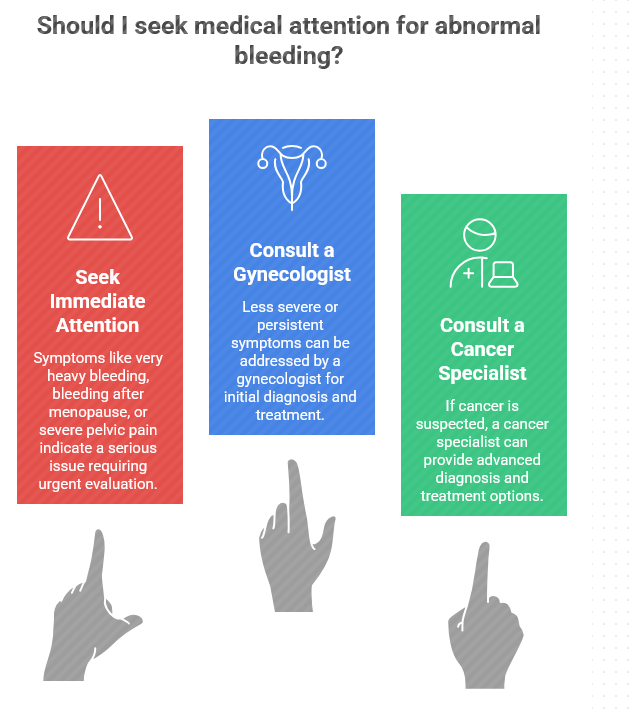
Not all abnormal bleeding is dangerous—but certain warning signs indicate the need for immediate medical attention.
You should not delay consultation if you experience:
- Very heavy bleeding (changing pads/tampons every 1–2 hours)
- Bleeding that lasts longer than 7–8 days
- Bleeding after menopause
- Bleeding between cycles frequently
- Pelvic pain or pressure along with bleeding
- Unexplained weight loss or fatigue
If you notice these warning signs, consult your doctor or a specialist without waiting. Immediate evaluation can make a crucial difference.
Can Abnormal Bleeding Be a Sign of Cancer
Yes, abnormal bleeding can sometimes be an early indicator of cancer, especially if you are over 35, have a family history of cancer, or possess other risk factors such as a history of unopposed estrogen exposure or past abnormal Pap smears.
Key cancer-related warning signs include:
- Bleeding after menopause (strong red flag)
- Persistent irregular bleeding
- Bleeding after intercourse
- Unusual vaginal discharge along with bleeding
For example:
- Endometrial cancer often presents with abnormal uterine bleeding.
- Cervical cancer may cause bleeding after intercourse.
- Ovarian cancer, though more subtle, can present with bloating, pelvic discomfort, and irregular bleeding.
If you are experiencing these symptoms, act quickly and schedule a consultation with an experienced ovarian cancer specialist or a qualified surgical oncologist. Timely evaluation can be life-saving.
Why Early Diagnosis Matters
One of the biggest advantages of identifying abnormal bleeding early is the possibility of early-stage diagnosis.
- Early-stage cancers are more treatable.
- Treatment options are less aggressive.
- Survival rates are significantly higher.
- Quality of life remains better.
Do not delay seeking a diagnosis; consult a specialist as soon as you notice persistent abnormal bleeding. Timely intervention preserves more options and reduces complications.
When to Consult a Cancer Specialist in Pune
If your symptoms persist or cause concern, take charge of your health by consulting a ovarian cancer specialist in Pune as soon as possible. Early action can guide you to the right diagnosis and treatment.
A surgical oncologist is trained to:
- Identify suspicious symptoms
- Recommend diagnostic tests such as ultrasound, biopsy, or imaging.
- Perform necessary surgical interventions.
- Coordinate multidisciplinary cancer care.
Doctors like Snita Sinukumar are experienced in handling complex cancer cases, including gynecologic cancers, and provide personalized treatment plans based on each patient’s condition.
What to Expect During Evaluation
If you visit a specialist for abnormal bleeding, the evaluation process may include:
- Detailed medical history review
- Physical and pelvic examination
- Blood tests (to check hormone levels or anemia)
- Ultrasound or imaging tests
- Pap smear or biopsy if needed
These tests help determine whether the cause is benign or requires further intervention.
Don’t Ignore the Signs Your Body Is Giving You
Your body often gives early warning signals before a condition becomes serious. Ignoring abnormal bleeding may cause dangerous delays in diagnosis and rapidly lead to serious complications.s.
Even if the cause is minor, seeking clarity from a healthcare professional is essential for your peace of mind and health. Act without hesitation if you notice abnormal bleeding.
FAQs
What are the signs of serious bleeding
Serious bleeding is typically characterized by very heavy flow, such as soaking through pads or tampons every 1–2 hours. Passing large blood clots, prolonged bleeding beyond a week, or symptoms like dizziness, fatigue, and weakness are also warning signs. If bleeding interferes with daily life or causes symptoms similar to anemia, it should be evaluated immediately by a doctor.
How many days of bleeding is abnormal
A normal menstrual cycle usually lasts between 3 and 7 days. If bleeding continues beyond 7–8 days consistently, it is considered abnormal. Prolonged bleeding can indicate hormonal imbalance, uterine conditions, or other underlying health issues, and should be checked by a medical professional.
What are the 4 bleeding disorders?
The four most common bleeding disorders are hemophilia, von Willebrand disease, platelet function disorders, and clotting factor deficiencies. These conditions affect the body’s ability to clot blood properly, leading to excessive or prolonged bleeding. Although less common, they may be considered if no other cause of abnormal bleeding is identified.
What is the most common cause of abnormal bleeding
Hormonal imbalance is the most common cause of abnormal bleeding, especially in women of reproductive age. Changes in estrogen and progesterone levels can disrupt the menstrual cycle, leading to irregular or heavy bleeding. Other common causes include PCOS, thyroid disorders, and stress-related hormonal changes.
Which type of bleeding is usually most serious
Bleeding after menopause is considered one of the most serious types and should always be investigated. Extremely heavy bleeding that leads to weakness or requires frequent pad changes is also concerning. Additionally, persistent bleeding between periods or after intercourse may indicate a more serious underlying condition.
Is abnormal bleeding always a sign of cancer
No, abnormal bleeding is not always a sign of cancer and is often caused by benign conditions like hormonal imbalance or fibroids. However, in some cases, it can be an early warning sign of cancers such as uterine or cervical cancer. That’s why persistent or unusual bleeding should never be ignored and must be evaluated properly.
When should I see a doctor for abnormal bleeding
You should consult a doctor if bleeding is unusually heavy, lasts longer than a week, or occurs between periods or after menopause. Symptoms like pelvic pain, fatigue, or sudden changes in cycle patterns also require attention. Early consultation helps identify the cause and prevents potential complications.
Can stress cause abnormal bleeding
Yes, stress can significantly disrupt hormonal balance, which, in turn, can affect the menstrual cycle. High stress levels may cause missed periods, irregular bleeding, or unusually heavy or light flow. While occasional stress-related changes are common, persistent irregularities should be evaluated by a doctor.
Is bleeding after menopause normal
No, bleeding after menopause is not normal and should always be taken seriously. It can be caused by conditions like endometrial thinning, polyps, or, in some cases, cancer. Immediate medical evaluation is essential to identify the cause and, if needed, begin appropriate treatment.
Which doctor should I consult for abnormal bleeding
You can initially consult a gynecologist for evaluation of abnormal bleeding. However, if there is suspicion of a serious condition or cancer, it is advisable to consult a Dr Snita Sinukumar a cancer specialist in Pune who can provide advanced diagnosis and treatment options if required.
Final Thoughts
If you’re experiencing persistent or unusual symptoms, don’t delay seeking medical advice.
Dr. Snita Sinukumar is a pioneering surgical oncologist in Pune and the first female cancer surgeon in India with an MCh degree, specializing in complex cancers and advanced treatments like HIPEC and robotic surgery. With 190+ Google reviews and a 4.8-star rating, she is trusted for her expertise and compassionate care.