

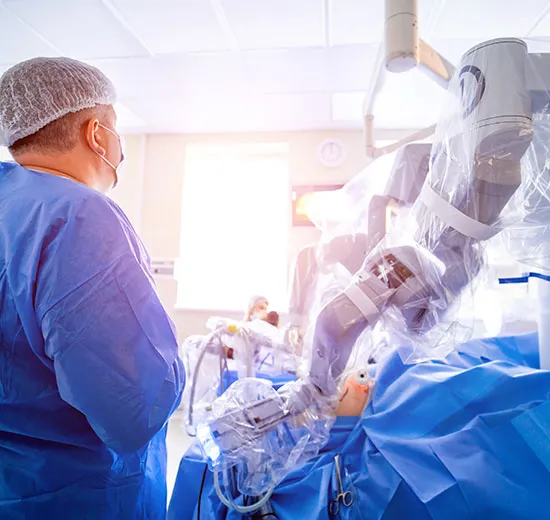

Robotic Gynaecological Surgery in Pune
Considering surgery for fibroids, an enlarged uterus, endometrial hyperplasia or a gynaecological cancer can bring up many questions.
Can I have robotic surgery? Will I need my uterus removed? Can robotic surgery treat large or multiple fibroids? What happens if I have a uterine or other gynaecological cancer?
Dr Snita Sinukumar is a Surgical Oncologist in Pune with experience in robotic gynaecological surgery, including selected benign uterine conditions and gynaecological cancers.
She assesses the condition, its extent, and the patient's individual circumstances before deciding whether robotic surgery is appropriate.
Robotic Gynaecological Surgery for Benign and Cancerous Conditions
Robotic surgery is a minimally invasive approach that may be considered for selected gynaecological conditions.
At Remedium Superspeciality Clinic, the robotic surgery spectrum includes:
Benign Gynaecological Conditions
Large Fibroid Uterus
Robotic surgery may be considered for appropriately selected patients with a large fibroid uterus.
Multiple Fibroids
Women with multiple uterine fibroids may require careful assessment to determine the most appropriate surgical approach.
Endometrial Hyperplasia
Some patients with endometrial hyperplasia may require surgery depending on the type of hyperplasia, symptoms and other clinical factors.
Gynaecological Cancers
Endometrial and Uterine Cancer
Robotic surgery may be considered for selected patients requiring surgery for uterine or endometrial cancer.
Selected Cervical Cancers
The surgical approach depends on the cancer stage and characteristics.
Selected Ovarian Cancers
Robotic surgery may have a role in selected ovarian cancer cases, while extensive disease may require more complex cytoreductive surgery.
The suitability of robotic surgery depends on the individual condition and surgical requirements, not simply on the availability of robotic technology.
What Is Robotic Gynaecological Surgery?
Robotic surgery is a type of minimally invasive surgery in which the surgeon controls specialised instruments through a robotic surgical system.
The robot does not perform the operation independently. The surgeon remains in control throughout the procedure.
The system provides:
- Magnified 3-dimensional visualisation
- Flexible surgical instruments
- Precise instrument movement
- Access to areas that can be difficult to reach through conventional instruments
Robotic Surgery for Large Fibroids and Multiple Fibroids
Fibroids are common non-cancerous growths that develop in or around the uterus.
Their size, number and location can vary considerably.
A woman may be advised to consider surgery when fibroids are associated with symptoms or other clinical concerns.
These may include:
- Heavy or prolonged menstrual bleeding
- Pelvic pressure or discomfort
- Abdominal enlargement
- Pressure on the bladder or bowel
- Pain
- Multiple fibroids
- A significantly enlarged uterus
Can a large fibroid uterus be treated with robotic surgery?
In selected patients, robotic surgery may be an option even when the uterus has large or multiple fibroids.
However, suitability depends on factors such as:
- Size of the uterus
- Number of fibroids
- Location of the fibroids
- Previous abdominal or pelvic surgery
- Overall health
- The type of surgery required
The appropriate approach depends on evaluating the individual patient.
Will I need a hysterectomy?
Not every woman with fibroids requires the same operation.
The surgical approach depends on factors such as age, symptoms, number and location of fibroids, reproductive plans and the overall clinical situation.
A consultation can help clarify which surgical options are relevant to your case.
Robotic Surgery for Endometrial Hyperplasia
Endometrial hyperplasia refers to an abnormal thickening of the lining of the uterus.
The condition can have different forms and may be associated with abnormal uterine bleeding.
Treatment depends on the type of hyperplasia, the patient's age and reproductive plans, symptoms and whether there are abnormal or precancerous changes.
For some women, surgery may form part of management.
Could robotic surgery be considered?
Where surgery is appropriate, we may consider a minimally invasive approach in selected patients.
The decision depends on the underlying diagnosis and the procedure required.
If you have been diagnosed with endometrial hyperplasia, bring your pathology report and previous investigations to your consultation so we can assess surgical options in context.
Robotic Uterine and Endometrial Cancer Surgery
Robotic surgery can also be considered for selected patients with uterine or endometrial cancer.
Depending on the diagnosis, surgery may involve:
- Hysterectomy
- Removal of the uterus and cervix.
- Removal of the Fallopian Tubes and Ovaries
- This may be recommended depending on the patient's age, cancer characteristics and treatment plan.
- Lymph Node Assessment
- Selected lymph nodes may be assessed to determine whether there is evidence of cancer spread.
- Additional Surgical Procedures
- These depend on the cancer's extent and characteristics.
The appropriate surgical approach is determined after evaluating the cancer type, stage and extent of disease.
What About Robotic Surgery for Cervical and Ovarian Cancer?
Robotic surgery can have a role in selected gynaecological cancer cases, but it is not suitable for every patient.
Cervical Cancer
The surgical approach depends on the cancer's stage and characteristics. Selected patients may be considered for minimally invasive surgery where appropriate.
Ovarian Cancer
Some ovarian cancer cases may be suitable for minimally invasive surgery.
However, ovarian cancer involving extensive peritoneal disease may require complex cytoreductive surgery. In selected patients, this may include CRS and HIPEC.
Dr Snita's practice includes complex ovarian cancer cytoreduction and CRS with HIPEC, so assessing the extent of disease is an important part of surgical planning.
The presence of cancer does not automatically determine the surgical approach. The extent and location of disease do.
How Do You Know if Robotic Surgery Is Right for You?
This is one of the most important questions to discuss during your consultation.
Your diagnosis
What condition or type of cancer has been identified?
The size and location
Where is the fibroid, uterine abnormality or tumour located?
The extent of disease
For cancer, has the disease spread beyond the area that can be treated through a minimally invasive approach?
Previous surgeries
Previous abdominal or pelvic procedures can affect the choice of surgical approach.
Your overall health
Your medical history and fitness for surgery are important when planning any procedure.
The operation required
The complexity and extent of the required surgery help determine whether robotic surgery is appropriate.
The principle is simple:
Choose the surgical approach based on what the patient needs, not simply on the technology available.
Robotic Surgery vs Open Surgery
Patients often ask whether robotic surgery is better than conventional or open surgery.
There is no single answer for every patient.
Robotic Surgery
- Uses small surgical incisions
- Provides magnified visualisation
- Uses specialised flexible instruments
- May support minimally invasive treatment in selected patients
- May allow earlier mobilisation and recovery in appropriate cases
Open Surgery
- Uses a larger surgical incision
- Provides direct access to the surgical area
- May be required for extensive or complex disease
- Can allow the surgeon to perform procedures that may not be suitable through a minimally invasive approach
The choice depends on the condition, the extent of surgery required and the patient's individual circumstances.
Robotic surgery is not automatically the better option, and open surgery does not mean that the treatment is less advanced.

What Happens Before Robotic Gynaecological Surgery?
Your surgical consultation is an important part of determining whether robotic surgery is appropriate.
Review of Your Diagnosis
Your reports, pathology and previous treatment are reviewed.
Imaging Assessment
Depending on your condition, you may have ultrasound, CT, MRI or other imaging.
Surgical Evaluation
The size, location and extent of the condition are assessed.
Medical Assessment
Your general health and fitness for surgery are evaluated.
Discussion of Surgical Options
You will be able to understand:
- Why surgery may be recommended
- Whether robotic surgery is appropriate
- What the operation may involve
- Whether an alternative surgical approach may be better
- What recovery may involve
- Whether further treatment may be required
What Can You Expect From Robotic Surgery?
When robotic surgery is appropriate, the procedure is performed through small surgical openings.
The surgeon controls the robotic instruments from the console while directly performing the operation.
Depending on the condition, the procedure may involve:
- Removal of fibroids
- Hysterectomy
- Removal of the uterus and cervix
- Removal of the fallopian tubes and ovaries
- Lymph node assessment
- Other procedures required for the individual condition
The exact operation depends on your diagnosis and surgical plan.
Recovery After Robotic Gynaecological Surgery
Robotic surgery is still surgery, and recovery depends on the procedure performed.
In appropriately selected minimally invasive procedures, patients may experience:
- Smaller surgical wounds
- Less postoperative discomfort in some cases
- Earlier mobilisation
- Shorter hospital stay in selected procedures
- Earlier return to routine activities
Recovery varies depending on:
- The type of surgery
- Size and complexity of the condition
- Additional procedures performed
- Overall health
- Any postoperative complications
We will discuss your expected recovery period based on the specific operation planned.
Why Consult Dr Snita Sinukumar?
Surgical Oncology Training
Dr Snita completed her MCh in Surgical Oncology at Tata Memorial Hospital, Mumbai, after completing her MS in General Surgery at B.J. Medical College and Sassoon Hospital, Pune.
Experience in Women's Cancer Surgery
Her surgical oncology practice includes ovarian, uterine, endometrial and cervical cancers, along with advanced procedures such as complex ovarian cytoreduction and CRS with HIPEC.
Robotic Gynaecological Surgery
Dr Snita performs robotic gynaecological surgery in appropriately selected patients, including surgery for uterine conditions and selected gynaecological cancers.
Advanced HIPEC Training
She has specialised fellowship training in Peritoneal Surface Malignancy and HIPEC from the National Cancer Institute in Milan, Italy.
This is particularly relevant for selected ovarian cancer patients with peritoneal surface disease.
Individualised Surgical Planning
The decision to use robotic surgery is made after considering the patient's diagnosis, disease extent, medical history, and the required operation.
The objective is to choose an appropriate surgical approach for the individual patient.
Book an AppointmentHear From Dr Snita
These videos can help patients understand robotic gynaecological surgery directly from Dr Snita.
Questions to Ask Before Robotic Gynaecological Surgery
Before deciding on surgery, consider asking:
- Is robotic surgery suitable for my condition?
- Why are you recommending robotic surgery for me?
- Could another surgical approach be more appropriate?
- Will I need a hysterectomy?
- Can my uterus be preserved?
- What exactly will be removed during surgery?
- What are the risks of the procedure?
- Could the surgery need to be converted to open surgery?
- How long will I need to stay in hospital?
- How long will recovery take?
- Will I need any additional treatment after surgery?
- Should I get a second opinion?
Frequently Asked Questions
Is Robotic Gynaecological Surgery Right for You?
Whether you are dealing with large or multiple fibroids, endometrial hyperplasia, a uterine condition or a gynaecological cancer, the first step is understanding your diagnosis and the surgical options available to you.
Dr Snita Sinukumar evaluates each case individually and recommends a surgical approach based on the condition, its extent and what is required for appropriate treatment.