

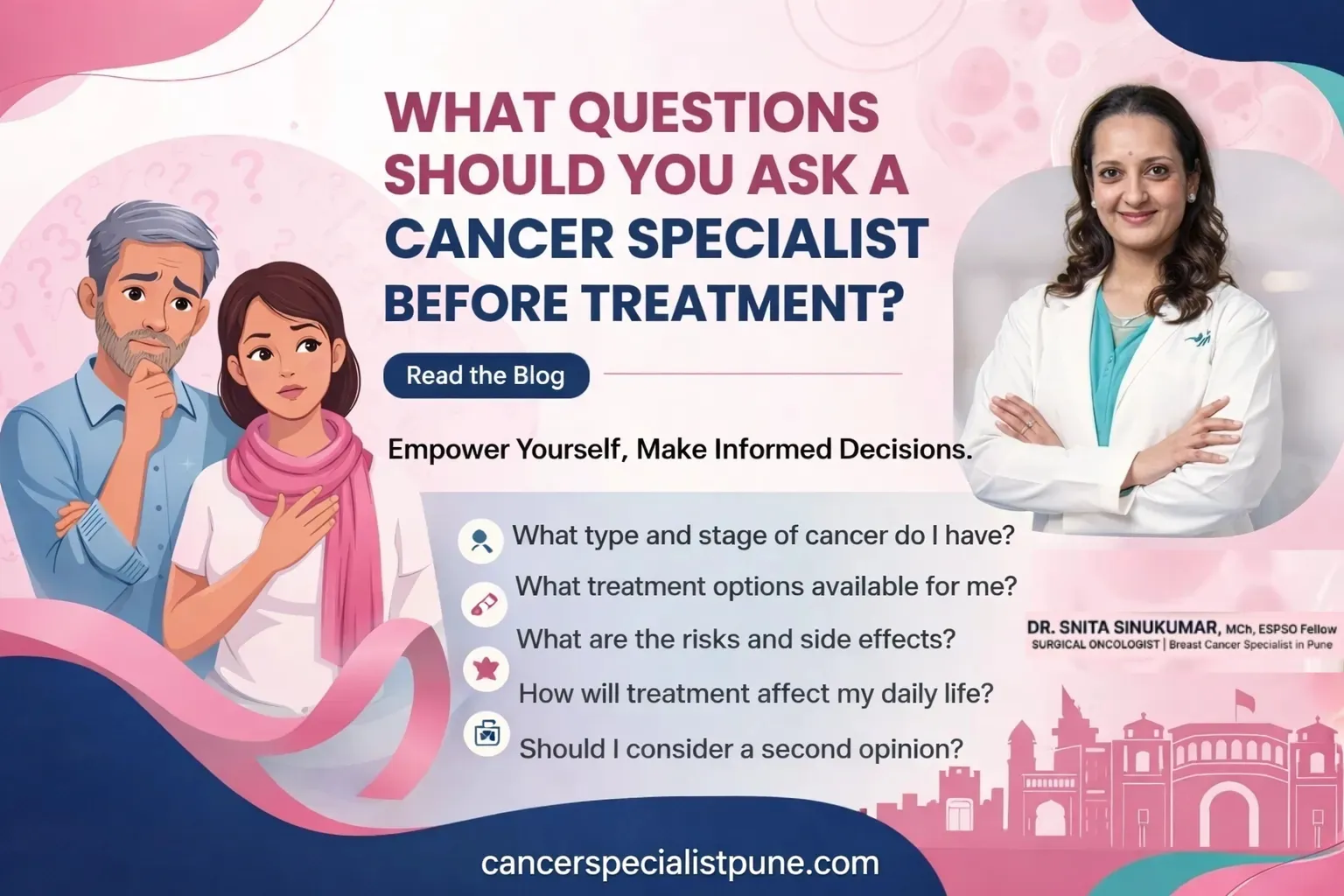



A cancer diagnosis can feel overwhelming, and one of the most important steps in your journey is choosing the right doctor and treatment plan. Asking the right questions during your consultation with a cancer specialist helps you make informed decisions, understand your condition better, and feel more confident about your treatment.
Whether you are meeting a doctor for the first time or seeking a second opinion, being prepared with the right questions can make a significant difference.
Why Asking Questions Matters
Cancer treatment is not one size fits all. Every patient’s condition, stage, and response to treatment can vary. Consulting an experienced surgical oncologist and asking the right questions ensures:
- Clear understanding of your diagnosis
- Awareness of treatment options
- Better mental preparedness
- Improved trust and communication with your doctor
Recent data also highlights why early consultation is important. A Pune-based report noted that 726 breast cancer cases were recorded in a single year across centers, showing a steady rise in cancer incidence, especially among younger women. This makes timely diagnosis and consulting a right specialist consultation even more critical.
Key Questions to Ask a Cancer Specialist Before Treatment
1. What type and stage of cancer do I have?
Understanding the exact type and stage of cancer is the foundation of your treatment plan. It helps determine how advanced the cancer is and what treatment options are most suitable.
2. What treatment options are available for me?
Ask about all possible treatments such as surgery, chemotherapy, radiation, or targeted therapy. A qualified cancer specialist will explain the benefits and limitations of each option.
3. Do I need surgery, and what does it involve?
If surgery is recommended, ask about the procedure, risks, success rates, and recovery time. A skilled surgical oncologist can guide you on minimally invasive or robotic options if suitable.
4. What are the risks and side effects of the treatment?
Every treatment has potential side effects. Knowing them in advance helps you prepare physically and emotionally for the journey ahead.
5. How long will the treatment take?
Understanding the duration of treatment helps you plan your personal and professional life. Some treatments may take weeks, while others may extend over several months.
6. What are the chances of recovery or success?
While outcomes vary, your doctor can give you an idea based on your condition, stage, and overall health. Early stage cancers generally have better outcomes.
7. Will I need chemotherapy or radiation therapy?
Not all cancers require every treatment type. Ask whether these therapies are necessary in your case and how they will be administered.
8. How will treatment affect my daily life?
It is important to understand how treatment may impact your routine, work, and overall lifestyle so you can prepare accordingly.
9. Are there advanced or minimally invasive treatment options available?
Modern cancer care includes robotic surgery and targeted treatments. For complex cases, procedures like HIPEC surgery in Pune may be recommended.
10. Should I consider a second opinion?
A good doctor will always support a second opinion. It helps confirm the diagnosis and gives you confidence in your treatment plan.
How to Prepare for Your Consultation
- Write down your symptoms and medical history
- Carry previous reports and test results
- Bring a family member or friend for support
- Note down your questions in advance
Before visiting a doctor, it is also important to review their Google ratings and patient feedback. You can also check real patient experiences on the testimonials page.
Choosing the Right Cancer Specialist Matters
Selecting an experienced cancer specialist plays a crucial role in your treatment journey. If you are dealing with breast-related concerns, consulting a breast cancer specialist in Pune ensures focused expertise and better treatment planning.
Look for:
- Relevant experience and specialization
- Access to advanced treatment options
- Positive patient reviews and ratings
- Clear communication and patient-centered approach
A trusted oncologist will not only treat the disease but also guide you throughout your journey. You can learn more about the doctor here.
Takeaway
Asking the right questions empowers you to take control of your cancer journey. It helps you understand your diagnosis, evaluate treatment options, and build confidence in your doctor’s approach.
Do not hesitate to ask questions. Your health and peace of mind depend on it.
FAQs
1. Why is it important to ask questions before starting cancer treatment?
Asking questions helps you understand your condition, treatment options, and expected outcomes. It also builds trust with your doctor and reduces anxiety during treatment.
2. Can I take a second opinion before starting cancer treatment?
Yes, taking a second opinion is common and recommended in many cases. It helps confirm the diagnosis and ensures you are choosing the best treatment plan.
3. What should I carry to my first cancer consultation?
You should carry all medical reports, imaging scans, biopsy results, and a list of symptoms. It is also helpful to bring a list of questions you want to ask.
4. How do I choose the right cancer specialist in Pune?
When choosing the right cancer specialist in Pune, look for a doctor with relevant experience, specialization in your condition, and access to advanced treatment options. It is also important to check patient reviews and ratings on Google to understand real patient experiences. A cancer specialist who communicates clearly and focuses on patient-centered care can make a significant difference in your treatment journey and overall confidence.


