

Summarize this article with AI:



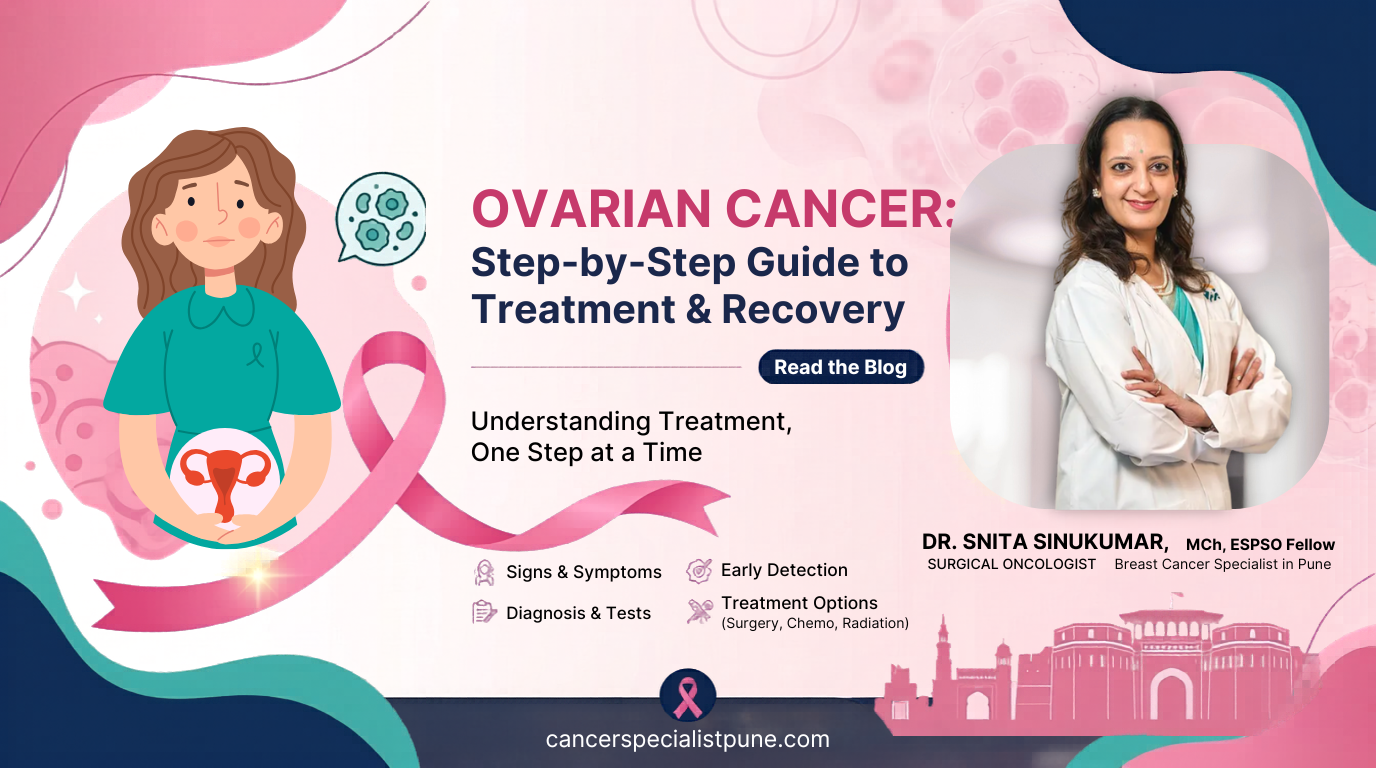
Ovarian cancer treatment can feel overwhelming, especially right after diagnosis. Understanding the step-by-step process helps patients feel more in control and confident about their journey.
Treatment is not the same for everyone. It depends on the stage of cancer, overall health, and how the body responds to therapy. This guide explains each step clearly so you know what to expect.
Step 1: Recognizing Symptoms and Seeking Medical Help
Ovarian cancer often develops silently, which is why early symptoms are sometimes missed. Common early signs include:
- Persistent bloating
- Abdominal or pelvic pain
- Feeling full quickly while eating
- Frequent urination
If these symptoms continue for more than a few weeks, it is important to consult a doctor. Many patients initially ignore these signs, assuming they are related to digestion or lifestyle.
Step 2: Diagnosis and Tests
Once you consult a doctor, the next step is diagnosis. This may include:
- Physical and pelvic examination
- Ultrasound or CT scan
- Blood tests such as CA-125
- Biopsy to confirm cancer
These tests help determine whether cancer is present and how advanced it is.
Step 3: Understanding the Stage of Cancer
Staging defines how far the cancer has spread:
- Stage 1: Cancer is limited to the ovaries
- Stage 2: Cancer has spread within the pelvis
- Stage 3: Cancer has spread to the abdomen
- Stage 4: Cancer has spread to distant organs
What is Stage 1 ovarian cancer?
Stage 1 ovarian cancer is the earliest stage, where cancer is confined to one or both ovaries. Early-stage detection offers the best chances of successful treatment.
Step 4: Surgery (Primary Treatment)
Surgery is usually the first and most important step in treatment. The goal is to remove as much of the tumor as possible.
This may include:
- Removal of the ovaries and fallopian tubes
- Removal of the uterus (in some cases)
- Removal of visible cancer from the abdomen
Advanced procedures such as cytoreductive surgery (CRS) and HIPEC are used in selected cases to improve outcomes.
Step 5: Chemotherapy
After surgery, chemotherapy is often recommended to destroy remaining cancer cells.
- Given in cycles over several weeks
- May be intravenous or intraperitoneal
- Helps reduce recurrence risk
Step 6: Targeted Therapy and Advanced Treatments
Depending on the case, doctors may recommend:
- Targeted therapy
- Hormonal therapy
- Immunotherapy
These treatments are tailored based on the cancer type and patient condition.
Step 7: Follow-Up and Monitoring
Regular follow-ups are important to:
- Monitor recovery
- Detect recurrence early
- Manage side effects
Patients typically undergo periodic scans and blood tests.
What Causes Ovarian Cancer
The exact cause is not always known, but certain risk factors increase the chances:
- Family history of ovarian or breast cancer
- Genetic mutations such as BRCA
- Increasing age
- Hormonal factors
When Should You Worry About Ovarian Cancer Symptoms
You should be concerned if you experience symptoms like bloating, pain, or digestive issues:
- Persist for more than 2–3 weeks.
- Occur frequently
- Do not improve with routine treatment.
Early consultation can help rule out serious conditions.
I Have Bloating and pain. Could It Be Ovarian Cancer
Bloating and abdominal pain are common and often not related to cancer. However, if these symptoms persist or worsen, or are associated with other signs, medical evaluation is important.
How Fast Does Ovarian Cancer Progress
The progression of ovarian cancer varies from person to person. Some aggressive types can spread quickly, while others grow slowly.
This is why early diagnosis is crucial to improving outcomes.
What Is the Success Rate of Ovarian Cancer
Success rates depend on the stage at diagnosis:
- Early-stage ovarian cancer has significantly higher survival rates.
- Advanced stages require more intensive treatment.
Globally, studies suggest that early-stage detection can have survival rates above 90%, while advanced stages have lower but improving outcomes with modern treatment.
Is Ovarian Cancer Curable
Ovarian cancer can be curable, especially when detected early. Even in advanced stages, treatment can help control the disease and improve quality of life.
How Long Can You Live With Ovarian Cancer
Survival depends on:
- Stage of cancer
- Type of tumor
- Response to treatment
Many patients live for years with proper treatment and follow-up care.
Cost of Ovarian Cancer Treatment in India
The cost varies depending on hospital, treatment type, and stage:
- Surgery: ₹2 lakh to ₹8 lakh
- Chemotherapy: ₹50,000 to ₹2 lakh per cycle
- Advanced treatments: Higher depending on complexity
Early diagnosis can help reduce overall treatment costs.
Choosing the Right Specialist Matters
Selecting an experienced doctor is critical for better outcomes.
An experienced ovarian cancer specialist can guide you through:
- Accurate diagnosis
- Advanced surgical options
- Personalized treatment plans
A cancer specialist in Pune with expertise in complex surgeries and HIPEC treatment can significantly improve results.
Takeaway
Ovarian cancer treatment is a step-by-step process that involves diagnosis, staging, surgery, and follow-up care. Understanding each stage helps reduce anxiety and empowers patients to make informed decisions.
Early detection, the right specialist, and timely treatment are key to better outcomes.
FAQs
1. What are the early warning signs of ovarian cancer
Early signs include persistent bloating, abdominal pain, feeling full quickly, and frequent urination. These symptoms are often mild but should not be ignored if they persist.
2. How do I choose an ovarian cancer specialist in Pune
Look for experience in treating ovarian cancer, expertise in advanced procedures, and positive patient reviews. A trusted ovarian cancer specialist in Pune can guide you with an accurate diagnosis and treatment planning.
3. When should I worry about ovarian cancer symptoms
If symptoms like bloating, pain, or digestive issues persist for more than a few weeks or worsen over time, you should consult a doctor immediately.
4. Is cancer in the ovaries curable
Yes, ovarian cancer is curable, especially when detected early. Even in advanced stages, treatment can effectively control the disease.
5. Can stage 3 ovarian cancer be cured
Stage 3 ovarian cancer is advanced but can still be treated successfully with surgery and chemotherapy. Many patients respond well to treatment and achieve long-term survival.
6. What is ovarian cancer treatment in Pune like
Ovarian cancer treatment in Pune includes advanced surgical procedures, chemotherapy, and targeted therapies offered at leading hospitals with experienced specialists.
7. How much does ovarian cancer treatment cost in India
The cost varies by stage and treatment type, ranging from a few lakhs to higher amounts, depending on complexity. Early diagnosis can reduce costs and improve outcomes.


