

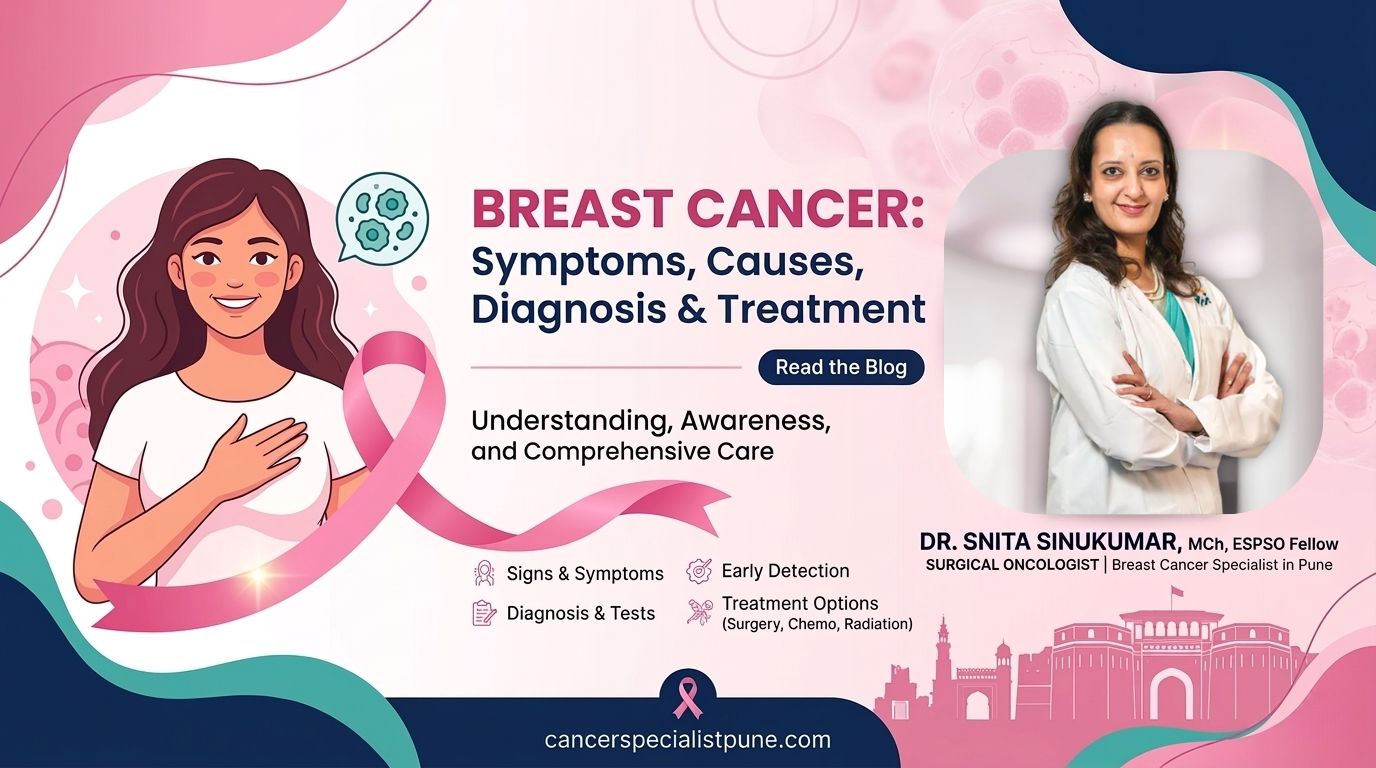



Breast cancer is one of the most common cancers affecting women worldwide, including in India. Although it primarily occurs in women, men can also develop breast cancer because they have breast tissue as well—though this is much rarer.
Early detection and proper treatment significantly improve survival rates. Understanding breast cancer, its warning signs, and available treatments can help people take proactive steps toward better health.
What Is Breast Cancer?
The human body is made up of billions of microscopic building blocks called cells. Normally, these cells grow, divide, and die in an orderly manner.
Sometimes, however, certain cells start growing uncontrollably and do not die when they should. These abnormal cells continue multiplying and form a mass of tissue known as a tumor.
When such tumors develop in the breast tissue, the condition is called breast cancer.
Breast cancer can start in different parts of the breast, including:
- Milk ducts (ductal cancer)
- Milk-producing glands called lobules (lobular cancer)
- Other breast tissues
If not treated in time, cancer cells can spread to nearby tissues or other parts of the body through the bloodstream or lymphatic system.
Why Do People Get Breast Cancer?
There is no single cause of breast cancer. However, several risk factors may increase the likelihood of developing the disease.
1. Family History: Women who have close relatives such as a mother, sister, or daughter with breast cancer have a higher risk of developing it.
2. Age: The risk of breast cancer increases with age. It is more commonly diagnosed in women over 35 years, although younger women can also develop it.
3. Lifestyle and Diet: Certain lifestyle factors may increase the risk, including:
- Smoking
- High-fat diet
- Excessive alcohol consumption
- Lack of regular physical activity
- Obesity
Maintaining a healthy lifestyle can help reduce the risk.
Signs and Symptoms of Breast Cancer
One of the most common early signs of breast cancer is a painless lump in the breast.
Other symptoms may include:
- A lump in the breast or underarm
- Change in breast shape or size
- Skin dimpling or puckering
- Nipple discharge (other than breast milk)
- Inverted nipple
- Redness or thickening of breast skin
- Persistent breast pain
It is important to note that not all breast lumps are cancerous. Many are caused by cysts, hormonal changes, or benign growths. However, any new lump should always be evaluated by a doctor.
Breast Changes During Puberty
Young girls going through puberty may notice a small lump beneath the nipple when their breasts begin developing.
This is usually normal breast development and not cancer. However, if there is any concern, it is always best to consult a doctor for reassurance.
How Is Breast Cancer Diagnosed?
Doctors may use several tests to diagnose breast cancer, such as:
- Clinical breast examination
- Mammography
- Breast ultrasound
- Biopsy (removal of a small tissue sample for testing)
- MRI scans in some cases
Early diagnosis greatly increases the chances of successful treatment.
Treatment Options for Breast Cancer
Treatment depends on several factors, including the type of cancer, stage, and whether the cancer has spread.
Lumpectomy
Lumpectomy is a breast-conserving surgery where only the cancerous lump and a small amount of surrounding tissue are removed.
This procedure is often recommended when cancer is detected at an early stage.
Mastectomy
Mastectomy involves the removal of the entire breast when cancer is widespread within the breast tissue.
In some cases, patients may choose breast reconstruction surgery after a mastectomy to restore the breast’s shape.
Radiation Therapy
Radiation therapy uses high-energy X-rays to destroy remaining cancer cells after surgery and reduce the chances of recurrence.
Chemotherapy
Chemotherapy uses powerful anti-cancer drugs that travel throughout the body to destroy cancer cells and prevent them from spreading.
Can Breast Cancer Be Prevented?
While breast cancer cannot always be prevented, early detection can significantly improve outcomes.
Doctors recommend:
- Regular mammograms
- Monthly breast self-exams
- Healthy lifestyle habits
- Routine medical check-ups
Being aware of any changes in the breast and consulting a doctor promptly can lead to early diagnosis and better treatment results.
Breast Cancer in India
Breast cancer is currently the most common cancer among Indian women. Studies show that nearly three-fourths of cases occur in women between the ages of 35 and 55.
Increasing awareness, regular screening, and early diagnosis are key to reducing mortality.
Breast Cancer Treatment in Pune
If you or a loved one has been diagnosed with breast cancer, consulting an experienced cancer specialist is essential.
Dr. Snita Sinukumar is a highly respected Surgical Oncologist in Pune, specializing in the diagnosis and treatment of multiple cancers, including breast cancer.
She holds an MCh in Surgical Oncology from Tata Memorial Hospital and has completed an ESPSO Fellowship in Peritoneal Surface Malignancy and HIPEC from the National Cancer Institute, Milan, Italy, and Krankenhaus Barmherzige Brüder, Regensburg, Germany.
With extensive expertise in cancer surgery and treatment planning, Dr. Snita Sinukumar provides comprehensive and personalized care to patients. Contact Us!
Frequently Asked Questions (FAQs)
What are the early symptoms of breast cancer?
What are the main causes of breast cancer?
Can men get breast cancer?
How is breast cancer diagnosed?
What are the treatment options for breast cancer?


Share Your Valuable Thought