
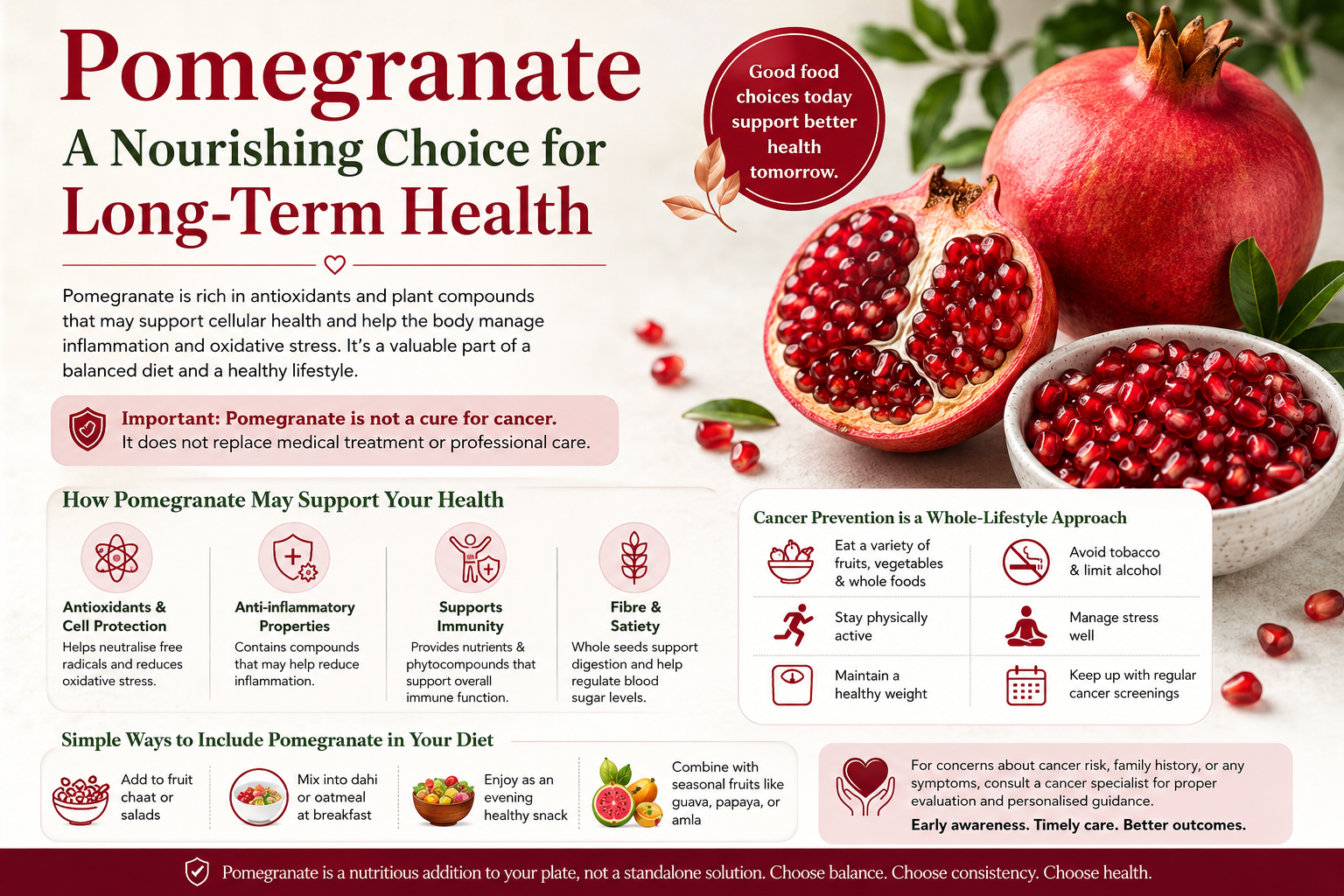



Pomegranate has earned a prominent place in conversations around healthy eating, and it is easy to understand why. The fruit is rich in antioxidants, widely available across India, and fits naturally into everyday meals. In cancer prevention discussions, it regularly comes up as an example of a food that may support the body's defences over time.
That said, it is worth being clear about what the evidence actually suggests. Pomegranate is not a cure for cancer. It does not replace medical treatment, and no single fruit can. What it can do is contribute meaningfully to a pattern of eating that supports long-term cellular health, and that distinction matters enormously when we talk about prevention.
Why Pomegranate Comes Up in Cancer Prevention Conversations
The interest in pomegranate is rooted in its nutritional composition. The fruit contains antioxidants and naturally occurring plant compounds that help the body manage oxidative stress. Oxidative stress, the cumulative damage caused by free radicals, is associated with cell deterioration over time and is one of the biological processes linked to chronic disease, including cancer.
Pomegranate also contains compounds with anti-inflammatory properties. Chronic, low-level inflammation is increasingly recognised as a contributing factor to the development of several cancers, and foods that help the body regulate inflammation are generally considered useful components of a preventive diet.
Some laboratory studies have examined whether pomegranate extracts may slow the growth of certain cancer cells. These findings are worth noting, but they come with important caveats. Laboratory results do not automatically translate into clinical outcomes, and the research in this area is still at an exploratory stage. The evidence does not support any claim that eating pomegranate treats can reverse cancer.
How Pomegranate May Contribute to a Healthy Diet
Antioxidants and cell protection
Pomegranate is among the fruits with a notably high antioxidant content. Antioxidants help neutralise free radicals in the body, reducing the cellular damage that accumulates from factors such as diet, environmental exposure, and the normal ageing process. Including antioxidant-rich foods regularly is one way to support the body's baseline capacity to protect itself.
Anti-inflammatory properties
The plant compounds in pomegranate, particularly punicalagins and punicic acid, have been studied for their role in reducing inflammatory markers. A diet that consistently incorporates such foods may help the body maintain a more balanced inflammatory response over time.
Supporting immunity through nutrition
A well-functioning immune system depends on many factors working together, such as sleep, physical activity, stress, and overall nutrition, among others. Pomegranate does not offer any dramatic immune-boosting effect on its own, but it does supply nutrients and phytocompounds that contribute to the broader nutritional environment in which immunity operates.
View this post on Instagram
Fibre and satiety
Unlike pomegranate juice, which loses much of the fruit's fibre during processing, eating the seeds whole provides dietary fibre that aids digestion and helps regulate blood sugar. Whole fruit is therefore generally preferable to juice for regular consumption.
What Actually Drives Cancer Prevention
Prevention is rarely the result of any single food or habit. The body of evidence around cancer prevention points consistently toward lifestyle patterns rather than individual ingredients. A diet built around a variety of colourful fruits and vegetables, whole grains, pulses, and lean proteins provides a far stronger foundation than one that merely adds a "superfood" to an otherwise unbalanced plate.
Alongside diet, regular physical activity, not smoking, limiting alcohol, managing stress, maintaining a healthy weight, and attending routine cancer screenings are all meaningfully associated with reduced cancer risk. Pomegranate fits sensibly into the dietary dimension of this picture. It is a nutritious fruit that supports a healthy eating pattern, not a standalone protective agent.
Simple Ways to Include Pomegranate in Everyday Meals
Pomegranate requires very little preparation and adapts well to Indian eating habits. A few practical options:
Add the seeds to fruit chaat for a tart, antioxidant-rich element. Stir them into dahi or oatmeal at breakfast. Use them as a topping for salads to add texture and colour. Enjoy a small bowl of seeds as an evening snack in place of packaged or fried foods. Combine with other seasonal fruits such as guava, papaya, or amla for a varied mix of nutrients.
The goal is consistency rather than quantity. Including pomegranate several times a week as part of a varied diet is more meaningful than consuming large amounts sporadically.
A Note on Diet and Medical Treatment
For individuals already undergoing cancer treatment, diet is an important part of overall well-being, but any significant changes should be discussed with the treating oncology team. Certain foods or supplements can interact with chemotherapy or other medications, so informed, personalised guidance is essential. Self-medicating with dietary changes in place of prescribed treatment is not advisable under any circumstances.
In Summary
Pomegranate is a nutritious fruit with real, if modest, contributions to make to a health-supporting diet. Its antioxidants and anti-inflammatory compounds make it a reasonable addition to everyday meals, particularly for individuals who are actively thinking about long-term wellness. It works best not as a hero ingredient, but as one part of a broader commitment to balanced nutrition, regular activity, and proactive health monitoring.
For those with concerns about cancer risk, a family history of cancer, or any symptoms that warrant attention, the most important step is always to consult a cancer specialist who can provide a proper evaluation and evidence-based guidance. Patients in Pune can learn more about the approach to surgical oncology and cancer care through Dr. Snita Sinukumar's profile.
FAQs
Is pomegranate actually beneficial for cancer prevention?
Pomegranate contains antioxidants and anti-inflammatory compounds that may support cellular health as part of a balanced diet. There is no evidence that it prevents cancer on its own, but it can be a useful component of an overall health-conscious eating pattern.
Is the whole fruit better than pomegranate juice?
Yes, in most cases. The whole fruit provides dietary fibre alongside its antioxidants, which juice typically lacks. Fibre supports digestion and helps regulate blood sugar, making whole pomegranate seeds a more nutritionally complete option than commercially processed juice.
How often should someone eat pomegranates?
There is no prescribed amount. A reasonable approach is to include it several times a week as part of a varied diet that prioritises different fruits, vegetables, and whole foods. Variety across the diet is more important than large quantities of any single item.
Can pomegranate replace cancer treatment?
No. Pomegranate is a nutritious food, not a medicine. Anyone who has been diagnosed with cancer should follow the treatment plan recommended by their oncologist. No dietary change should be used as an alternative to evidence-based medical care.
Can pomegranate interact with cancer medications?
This is a question best directed to one's treating doctor. Some foods and supplements can affect how certain medications are processed in the body, and it is always worth discussing dietary habits with the oncology team during treatment.